Wednesday, July 27, 2011

Irrigation leak on #17


Some of you might have seen the geyser on #17 yesterday afternoon.  One of the irrigation fittings, we connect our greens hoses into, broke yesterday afternoon forcing us to close down the system to the entire back nine.  Due to some quick thinking, and a lot of hard work, we resolved the issue with no negative effects to the other greens.  Seeing leaks like in this photo, you can appreciate the amount of pressure required to run a system of this size.

Thursday, July 7, 2011

Effects of drought on golf course

Several people have asked me about why the tees, fairways and rough look brown right now.  The reason we have really green, healthy areas and brown areas has to do with several factors.  The main reason is that we are currently under a moderate drought and have just been through one of the hottest Junes on record.  Other factors have to do with the compaction in the soil, the terrain, and our irrigation coverage.  We do not have irrigation on all areas of the golf course.  There are certain areas that are in play that we cannot irrigate.  Some other areas have rocky soil or excessive compaction so water cannot get to the root of the plant.  This water sheds off of these dry areas and collects in low areas.  The areas immediately surrounding greens are more dry due the different water demands from the greens versus the Bermuda.  We are applying the vast majority of the water to the greens via hand watering so the surrounds are not getting sufficient moisture.   We have been hand watering these areas to keep them from getting too dry.
Although these brown, dry, areas appear dead, they are actually dormant.  When Bermuda cannot get the proper amount of water during the summer months, it can go into a dormancy similar to the winter months.  Once the plant has a sufficient amount of moisture it will "awaken" out of dormancy and green up again.

Tuesday, June 28, 2011

Syringing Greens


Well it feels like August already and the syringe team is out in full force.  Syringing is a term used to describe the application of water on Bentgrass greens during the hottest part of the day to reduce heat stress.  This watering is done very lightly and multiple times a day.  The agronomy staff has been trained to stay out of the way of golfers as much as possible, but there are times when we have no choice but to water in between groups. We ask that whenever you see someone watering a green in front of you, and they have pulled the flagstick, that you please give them a minute to finish before you hit your approach shot.  No one likes to get hit with a golf ball and we certainly do not enjoy holding up play.  We thank you for your patience and look forward to a great summer.

Monday, June 27, 2011

#1, #12, #13 Greens


I've been getting numerous questions regarding the appearance of #1, #12 and #13 greens.  We sent samples to a plant pathologist at Oklahoma State University and the samples came back positive for Pythium blight.  Pythium is a common disease found on stressed turf usually during intense heat and humidity.  These greens receive considerably less air movement and sunlight.  This means that these greens endure more intense heat, and humidity, and because of this, disease pressure is more severe on these three greens.
Once we confirmed the presence of the Pythium, the affected greens were treated with a fungicide specific to this disease and a light rate of fertilizer was applied to encourage recovery.  The agronomy team has been working very hard to improve the growth conditions over the last few weeks by removing shade trees, utilizing fans to circulate more air, closely monitoring soil moisture, leaf temperature and nutrient levels.  Progress may be slowed by the intense heat but we are already seeing some improvement.
If you have any further questions feel free to contact me.  Thanks

#2 Green


Several people have asked me about the spots on #2 green.  These spots are Annual Bluegrass under heat stress and is dying out.  Annual Bluegrass, or Poa, is a common weed in Bentgrass putting greens and has been slowly establishing itself for years.  Our new handwatering techniques and monitoring systems have allowed us to significantly reduce the amount of irrigation required to keep the Bentgrass healthy.  Besides improving the health of the Bentgrass, this reduction in water usage is also stressing out the Poa.  Poa needs more soil moisture than Bentgrass to survive the heat of the summer and since it isn't available, these plants are starting to die out.  Although #2 green looks funny now, in time the Bentgrass will fill in these spots and the amount of Poa will continue to decline.

Wednesday, June 15, 2011

Tree removal

I spent the morning taking pictures and evaluating the amount of shade on some of our greens.  Sunlight is a critical component to the overall health of greens.  The turf must have a certain amount of sunlight each morning before the onset of stress.  I equate it to the these greens skipping breakfast each morning and then burning a lot of energy each afternoon trying to survive the heat.  They can make it through the day but it isn't a good long-term situation for healthy greens.
Now, I don't take removing trees lightly and only do so when necessary.  Trees that are too close to greens reduce needed air circulation and increase shade, both of which increase the humidity in the area around the green.  We feel that by removing a select few trees, we will be able to improve the growing environment for the few greens that struggle each year.  Crews are currently working around #1 green and once finished, will be moving to #12 green.

#1 green at 7AM

#1 at 9AM

#12 at 7AM

#12 at 9AM

Monday, June 13, 2011

Fairway Slicing


The maintenance staff began slicing fairways this morning.  Slicing fairways is a great way to alleviate the negative impacts of compaction from cart and mower traffic.  Over time, compaction tightens up the soil and reduces the ability of the turf to produce long healthy roots.  This practice will allow water, nutrients and oxygen to get into the root zone more effectively.
The machine we use is called a shatter-tine machine and uses curved "knives" that go into the turf and twist the ground as they come out.  This twisting motion fractures the soil which allows the roots room to grow.  Once the fairway has been sliced, the fairway mower follows to clean up all the tufts left behind.  The fairways are cleaning up nicely and there should be minimal disruption to play during this process.

Friday, June 3, 2011

Core aeration


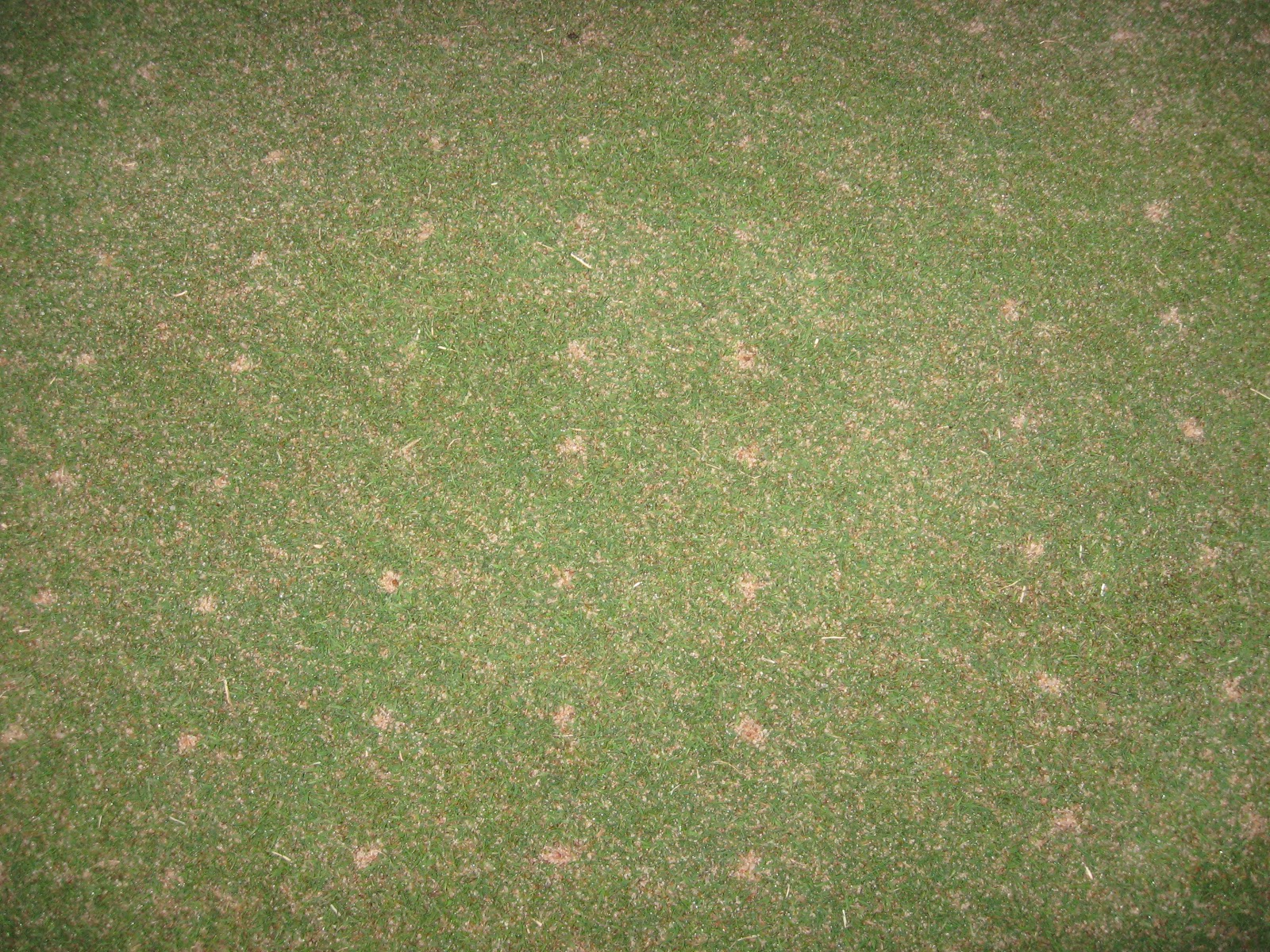
The turf team has been in high gear over the last few days aerating greens.  We felt that an additional core aeration was needed to ensure that we have the drainage capacity and strong root systems to handle another hot and humid summer.  Smaller tines were used to minimize the time required to heal in.  The larger particles of sand that didn't work into the holes were blown off to keep the greens rolling as smooth as possible.  Overall, the greens came out of the process really well and we should be back in great shape in just a few days.  The last picture is two days after the cores were pulled.

Sunday, May 29, 2011

Memorial weekend preparations

This past week, the staff had been in high gear getting the golf course ready for the holiday weekend.  We have been scrambling around mowing all areas of the golf course, trim mowing, and wrapping up other miscellaneous detail work.
One of the miscellaneous projects that had been on my list for a few weeks was renovating the area between the cart path and the green on #13.  This area had been worn down due to foot and cart traffic and was in need of attention.  We added sod to this area and a mulch pathway to focus the foot traffic approaching the green.

Tuesday, May 10, 2011

Verticut and Topdressing on Greens


The greens are loving the recent weather and have really taken off.  The rapid growth of the bentgrass this time of year also means that thatch can become an issue.  Thatch is just old roots and leaves that have died and have become a part of the soil.  Thatch can be a problem because it acts like a sponge and can trap excess moisture and nutrients.  This thatch layer has several downsides:  it can keep water and nutrients from moving down into the rootzone, keeps the surface soft, increases ballmarks, and decreases ball roll.
In order to keep the thatch from accumulating, we periodically vertical mow and lightly topdress the greens with sand.  The vertical mower is similar to power raking your yard and it allows us to remove some of the excess thatch without interfering with playing conditions.  The sand is dusted onto the green to dilute the thatch further and to smooth out the surface.

Friday, April 29, 2011

USGA article

Below is an article written by Charles "Bud" White, the Mid-Continent Director for the USGA. In this article, it explains all of the negatives associated with the decrease in putting surface heights during the summer stress time periods. It also promotes increasing the putting surface height just slightly going into these time periods,as it can prove to be beneficial as it relates to managing bentgrass in the southern transition zones of the United States.


THE  CUTTING HEIGHT  DILEMMA           
       Finding the right balance.
BY CHARLES “BUD” WHITE

In the last few years, there has been an ever-increasing demand for faster putting green speeds on golf courses throughout the United States. Brought on in large part by “TV golf” or tournament golf, the general public now wants to play under the same conditions as the professionals.
During my USGA Turf Advisory Service visits, I am often informed of how golfers played on 12' or 13' Stimpmeter® speeds during an event and loved it. The fact is, these golfers were probably playing on greens that may have been about 11' on the Stimpmeter,® but they thought or were told that greens were at speeds of 13'.
Bottom line, the average golfer would three-putt or four-putt with those speeds. This need for speed has brought on a new set of problems because superintendents are reducing cutting heights to achieve these increased speeds.
In the last 10 to 12 years, we have seen  a shift in putting green maintenance, where the average cutting height at many courses has gone from 5/32" (0.155) to less than 1/8" (0.125). Some courses are even at the 0.085" to 0.090" range. At these extreme heights, there is virtually no leaf area left, and the turf is in significant physiological stress all the time.
Root development and turf health are directly related to cutting height — the lower the cutting height, the less root development. The shift in putting green management causes undue and often unbearable stress and strain on the turf.
Literally, it is management on a razor’s edge, and it is a major reason why we have a large increase in disease and fan use on bentgrass greens in the South over the last several years. Golfers often tell me that 15 years ago the greens were just fine. Now these greens can’t survive without fans, and golfers want to know why. Quite simply, the decrease in cutting height has caused increased stress on the grass.
I refer you to a Green Section Record article authored by Dr. Bingru Huang, Burning the Candle at Both Ends, which clearly points out the dramatic difference in turf health by simply raising the cutting height 1/32" during the summer stress periods. This basic, grass-roots research summarizes most of the turf health problems we are experiencing and where this lowered cutting height on greens has led us as an industry. In addition to increased use of fans, we have also seen a greater negative impact from tree shade and root com- petition.
Shade imposes stress on turf at lower cutting heights because of less turf leaf area and a reduced ability to photosynthesize in reduced-light environments. Even concentrated foot traffic, such as the ingress and egress points on greens, has a much greater impact due to this reduction in leaf area and turf health. A slight raise in cutting heights to moderate levels would still maintain greens at a very acceptable level of speed and quality during the times of summer stress yet would minimize most problems and eliminate many.
Superintendents are using alternative measures, such as alternating mowing and rolling during the summer to reduce stress. In my experience, there is no reason that a golfer at any level cannot enjoy an average daily speed of 9' to 10' during the summer stress and still have a challenging game. If a golfer insists he must have 11' or more on an average day to have a quality putting green, then he or she has missed the whole purpose of the game and is not concerned about course health whatsoever.
The cutting height dilemma on U.S. golf courses has gone way past the reality mark and is creating impossible growing conditions for many courses. Golf courses cutting below 1/10" have found that raising the cutting heights above this level can actually produce greater putting quality and speed by utilizing other grooming techniques, because there is more leaf tissue to work with during the grooming process. There is definitely a point of diminishing returns once the cutting height drops below 1/8". With luck, golfers can be educated to understand what these excessively low cutting heights do to the turfgrass, and then they may be more realistic in their demands. The summer of 2010 taught many a lesson the hard way. Reasonable cutting heights, when balanced with other grooming techniques, will not reduce the quality of greens, can actually enhance the golfing experience, and can do so without putting speed reductions.

BUD WHITE is the director of the Green
Section’s Mid-Continent Region.

Friday, April 15, 2011

#8 Bunker Renovation


Earlier this week the maintenance staff finished the bunker renovation on #8.  The new drainage was installed as well as the new bunker sand.  This area will remain ground under repair for a week, or so, until the sod is fully established.  Once the sod is established, it will be mowed and the bunker complex can be opened.

Friday, April 8, 2011

Greens aeration

The turf team has been hard at work since Monday aerating the greens.  We completed the front nine greens Monday and the back nine greens Tuesday.  The last two days have been spent cleaning off excess sand and  rolling greens to make sure the the putting surface is smooth and consistent.
Although golfers seem to understand that greens aeration is necessary, we still want to get the greens back to their original condition as soon as possible.  For those that aren't sure exactly what aeration is or what the process looks like, I've included some pictures to help explain the process.
To start the process we double verticut (de-thatch) the greens and blow off the debris.  Then we mow them to clean them up further.  Once this is done, we begin pulling cores with the aerifier.

The aerifier pulls cores at a specific width and spacing to remove as much organic matter as possible.

Once the cores are pulled, the harvester comes through and picks them up.  Any remaining material is then blown off to get the green ready for topdressing.

The topdressing sand is broadcast onto the green at a specific thickness to be sure that enough sand is there to fill all the holes.

After the topdresser is finished, and the sand is dry, a mower fitted with brooms brushes the sand into the holes and removes any excess off the green.

Here are a few pictures of the finished product.  Our goal is to make it so that only when you walk onto the green can you tell that they've been core aerated.

If you have any further questions or would like to learn more about the process please feel free to contact me.


Thursday, March 31, 2011

#8 Bunker Renovation


On Monday, the maintenance staff started the last bunker renovation of the off-season on #8.  The bunkers on #8 were very old and in sad shape.  The little amount of sand we had in them was contaminated with rocks and soil.  The new design will minimize labor while enhancing the links aspect of the hole.  The new bunkers will be deep, pot bunkers with fairway height turf surrounding them on all sides.  This should increase the possibility of rolling your ball into the hazard thus maintaining integrity of this short par 3.  I've been looking forward to starting this project for a few weeks and am please with the progress so far.
The first step in the process was to get the rough shaping done with the skid loader.  This equipment made short work of this part of the project and was well worth the expense.


Then we installed the drainage coming from the bunkers to the basin.


Once the drainage was installed, the trenches were back filled and graded again


The next step was to create the new bunker edge and compact the soil inside the bunker to create a strong smooth bunker floor.


If the rain doesn't hold us off today, we should get the sod installed and get our drainage dug in today.  I hope to be ready for sand by tomorrow afternoon.
  

Thursday, March 24, 2011

#7 Bunker Renovation


The bunker on #7 officially open for play starting this morning.  Our staff worked very hard yesterday shoveling and raking all 80 tons of bunker sand into place.  Once we got all our sand depths correct, we hand watered the sand to help pack it down, then smoothed it out with a landscape rake.  The guys went through this morning and hand raked it to get it ready for the day.
Please remember that this bunker will be soft for a few weeks while it continues to settle in and firm up.

Tuesday, March 22, 2011

#7 Bunker Renovation


Despite multiple delays from weather and other projects the maintenance staff is beginning to pick up momentum on the bunker renovation on #7.  The additional trenches were cut in to increase the drainage capacity and flush outs were installed.  Over the last few days all the new pipe and gravel have been installed.


This renovation is a little different than the others we've completed this winter, in that it will be ready for play as soon as we are finished installing the new sand.  Since no grading or sod was needed, the new sand will be packed down and then it can be opened for play.  New bunker sand will be delivered in the morning and the crew should be able to wrap up this project by tomorrow afternoon.

#16 Bridge project


JonesPlan came in last Thursday and finished all grading and prep work so we could begin laying sod on Friday.
Before we started the sod project, we installed some stone steps to encourage the golfers to stop their carts in the widened section of cart path.  Hopefully this will keep people from parking too close to the bridge and blocking the path.  Once we finished installing the steps, we laid the remaining sod and seeded the native areas along the pond bank.  The straw should help stabilize the soil along the bank and help retain moisture until the seed germinates.
Since all the sod has been laid, the project is officially finished, we just need to keep the sod and seed moist for a few weeks until they green up.  This area will remain ground under repair during this time.

Thursday, March 10, 2011

#16 Bridge Project

Over the last few days the crew has been constructing forms and pouring curbs.  The crew worked overtime yesterday to ensure that the curbs were finished properly.  Now that the curbs are done, we will spend the next couple of days removing the forms and grading for sod.


Monday, March 7, 2011

#16 Bridge Project


Since the bridge was lifted into position last week, the turf maintenance team has been working very hard pouring concrete for the paths leading up to, and away from, the bridge on #16 green.  Wooden forms were installed and steel was used to reinforce the cart path.
Now that all the concrete has been poured, the next step in the process is the installation of the curbing. We will begin drilling rods into the edge of the path and installing our forms tomorrow. The plan is to pour the concrete tomorrow afternoon. Once everything is dry we will begin grading the soil. alongside the path and install sod.