Tuesday, May 21, 2019

The Great Rain of May 2019!


Image result for stock canoe photo

Everyone get out their canoes and kayaks! Just about the only way you would be able to get around the golf course this morning after the rain we just had.  In all seriousness, the weather in May can be unpredictable and recently we've had more than our share of storms.  In the past 24 hours, we've had almost 8" of rain. May is historically the wettest month of the year, with just over 6" average rainfall, and we surpassed that mark in less than 24 hours!  This is on top of the almost 5" of rain we've received thus far in May.  To say it's been wet lately is a huge understatement.

The tunnel ceiling is almost 10 feet tall. 
After the tornadoes and lightning moved off to the east this morning, we set out to assess the damage.  Besides being incredibly wet, the golf course fared well.  We didn't have any major flooding damage, except for some limbs and miscellaneous debris in some fairways.  The rain came down so fast that it overwhelmed the tunnel pump and we had to ask for help from the Public Works department to get it pumped out.  Our drainage infrastructure handled the water well, it just took most of the day to drain out the excess water off the golf course.

All contaminated sand with mud will have to be removed and replaced
The one part of the golf course that didn't survive the storm was our bunkers.  The majority of the bunkers look like the picture of #5 bunker complex shown to the right.  Significant sand movement
and exposure of the sub-grade.  This will require an extensive amount of work from our crew to get them back into normal playing condition.  Typically, when we get an inch or two of rain, our crew can spend the next day putting them back together and we can move on to another task.  This time it feels different.  The damage so extensive that I feel we will have to completely remove and replace the majority of the sand on the golf course.  This will drastically extend the time to get them back into playable condition. Several dump truck loads of new sand will need to be hauled out and placed into the bunkers.  This process will begin tomorrow and could last all the rest of the week, possibly into next week.  We appreciate everyone being patient with us while we work to restore the condition of the bunkers and please realize that a few other tasks will be deferred so we can focus our resources on making this process go as quickly as possible.   

Monday, May 13, 2019

Spring Update

For those who read this blog regularly and have been looking for new posts, I apologize.  I don't update this blog nearly as often as I should but am trying to continue to post content periodically throughout the year.  Spring is always a busy time of year on the golf course, and this year is no exception.  We have been working on wrapping up some last minute winter projects and preparing the course for the beginning of the new growing season. 

One of the most important spring activities each year is spring greens aeration.  This year, based on our annual soil testing, it was determined that we should aerate our greens twice.  Not wanting to disrupt the golf calendar more than necessary, we decided to complete the two aerations back-to-back.  This minimized the recovery time and greens were back to normal in 10-14 days.  Almost two months have passed since we finished the aeration process and greens have been very healthy and smooth. 
As a part of our yearlong cultivation plan, we decided to go out last week with another mini-tine aeration to continue to pull more organic matter from the putting surfaces.  This aeration is non-invasive and greens never lost smoothness or speed during the process.  Due to the aggressive nature of our aeration plan this year, we are already 80% toward our goal of displacing a minimum of 20% of the surface each growing season.  This will set us up well for the stressful summer months, and will set us up to meet our goal of displacing almost 30% of the surface.  Given the age of our greens, this aggressive goal will allow us to keep the greens healthy, firm and quick more often throughout the season.

Spring green up of Bermudagrass is notoriously slow in this part of the country.  Temperature fluctuations and unpredictable weather always seems to confuse the Bermuda until we get into mid-May.  This year has continued that trend.  We began to green up back in mid-March, but haven't seen active growth until the second week of May.  We are scheduled to apply our first course-wide fertilizer application on May 14th.  This will force the plant to grow along with warming temperatures. 

National Golf Day, in Washington D.C., was on May 1st this year and for the first time, I was able to attend, on behalf of the Oklahoma Golf Course Superintendent Association.  This was my first time attending National Golf Day and I was honored to be chosen to represent the OKGCSA in Washington D.C.  The GCSAA and We Are Golf organize the entire event and have done a great job coordinating congressional meetings and volunteer activities around the Mall for over 200 superintendents from across the country.  We completed needed landscape work around the memorials in the national Mall on Tuesday April 30th and then on Wednesday May 1st, we spread out at the Capitol and meet with over 210 congressional offices about the value of the golf industry.  It felt so rewarding to meet with Senators and Congressmen that represent our great state and tell them about the many benefits of the over 200 golf facilities in Oklahoma.


Wednesday, March 27, 2019

Please Repair Ball Marks!


Thanks to the hard work of the grounds staff, spring greens aeration is behind us.  Now that the course is back open for play, the grounds staff will shift focus to improving the surface quality of the greens.  The staff will be out several times over the next few days rolling, brushing and mowing the greens to get them as smooth as possible.  During this time, as with any aeration, the surface will be softer than normal and especially prone to ball mark damage.  While the surface is recovering, ball marks will be deeper and bigger than other times of the year.  Please help out everyone else that enjoys the golf course by seeking out and repairing any ball marks on the greens.  We appreciate your cooperation!

Thursday, January 31, 2019

Brush Clearing


While our golf course doesn't have very many trees in play, there are quite a few wooded areas along property edges that require occasional maintenance. Each year, during the off-season, we pick a few areas and clear them out for various reasons.  Could be a request from a concerned neighbor, to improve air flow or sunlight to a green, or to improve the view across the golf course. This year, we decided to tackle several areas throughout the course we have never been to.  Once we had the areas we wanted to clear out identified, we quickly realized that the amount of tree and brush removal was going to be a lot more than we could handle doing the work by hand.  So we decided to bring in a special skid loader attachment specifically designed for clearing wooded areas such as this.  This forestry cutter, pictured above, was the perfect tool to quickly mulch all the trees and shrubs we wanted to remove.  I estimated the amount of work we wanted to complete would have taken our entire crew 2-3 weeks to do by hand and with this machine I was able to do it in 20 hours by myself.  Turned out to be a very efficient way to go!

Before
The first area we wanted to focus on was along 86th street, just west of our shop.  This area is overgrown and views of the golf course are limited during the growing season due to all the vegetation.  Even though the picture to the right was taken during winter, you still can see how big of an impact the vegetation has on the view from the street.  Now that the brush and small trees are all gone, the view of the golf course from the street is much better.


After


#15 looking at #14 green- before
The next area we focused on was behind #14 green.  I've wanted to remove the trees and brush behind this green for a few years but just couldn't bring myself to spend the time on it until now.  The machine we used for this project is perfectly suited for the small trees and brush that is found in this area.  Despite being heavily wooded and untouched for decades, I was able to grind everything down to the ground in less than 4 hours!

After


#16 tee looking back to #15
The last area we we cleared out was south of #16 tee box.  This area has long been know to be one of the hottest places on the golf course during the summer, mainly due to the lack of airflow.  I figured that while I had the machine, and we were ahead of schedule, I'd take some time and clear out what I could.  As you can see from the picture on the right, we were able to accomplish quite a lot.  Airflow should be much better from now on and we will also get more sunlight to the tee bank behind the water cooler.  This has been a muddy, bare spot due to the shade over the years and Bermuda should take back over now that there is plenty of sunlight.

Now that the vegetation is removed, the work to convert these areas to native grass will begin.  Many of the native grass species will begin to move in naturally, however, there will be a lot of weed pressure and many of the tree and brush species will attempt to reestablish.  The grounds staff is planning on seeding these areas with Tall Fescue to help speed up the establishment process, and there will also need to be occasional herbicide applications to these areas to ensure trees and annual weeds don't reestablish.  The finished product will be consistent with the rest of the native areas throughout the property.

Wednesday, January 2, 2019

Looking back on 2018

Every year brings it's own set of challenges and 2018 was no different.  Labor shortages and temperamental weather tested the metal of the grounds department.  Looking back I can say we rose to the challenge.  This is not so say, however, we didn't have some bumps and bruises along the way. 

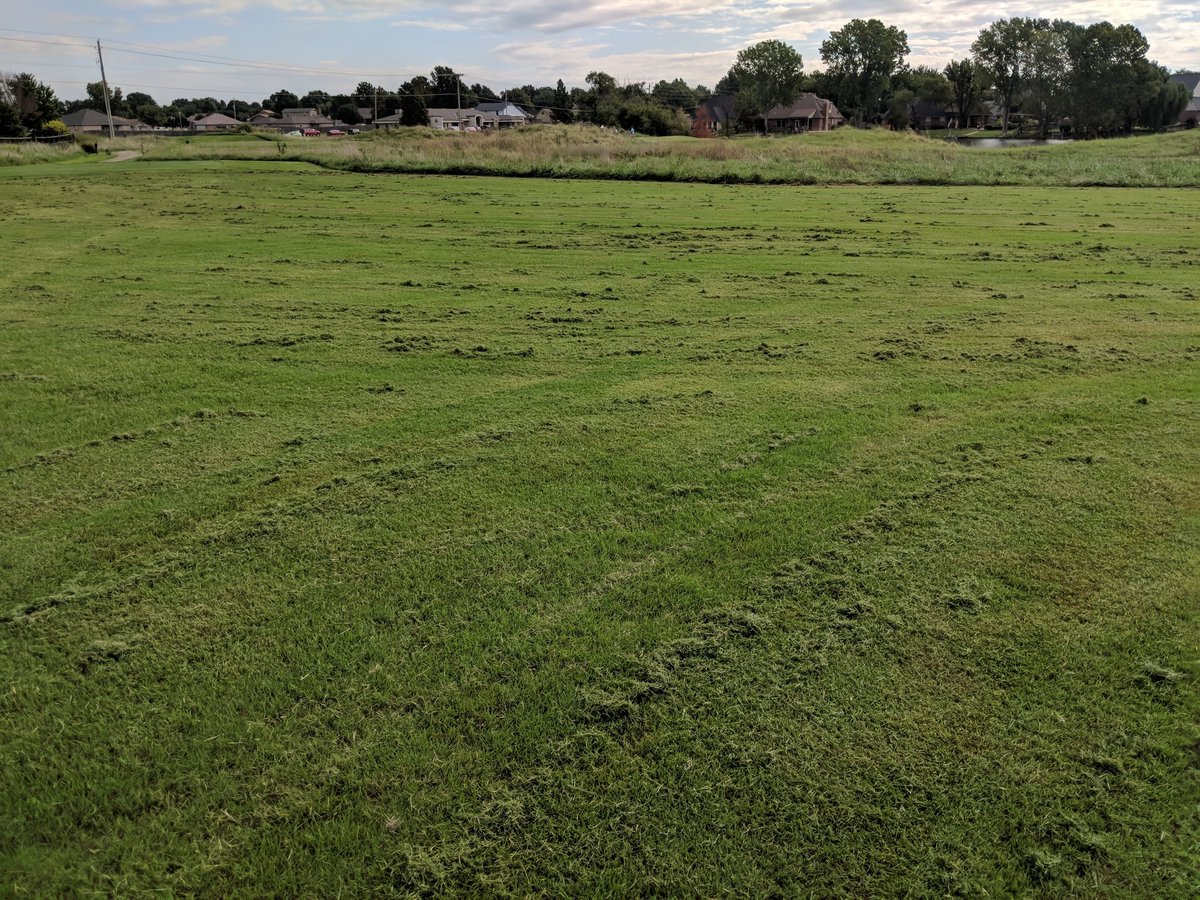
grass clippings were common this year due to staff shortage
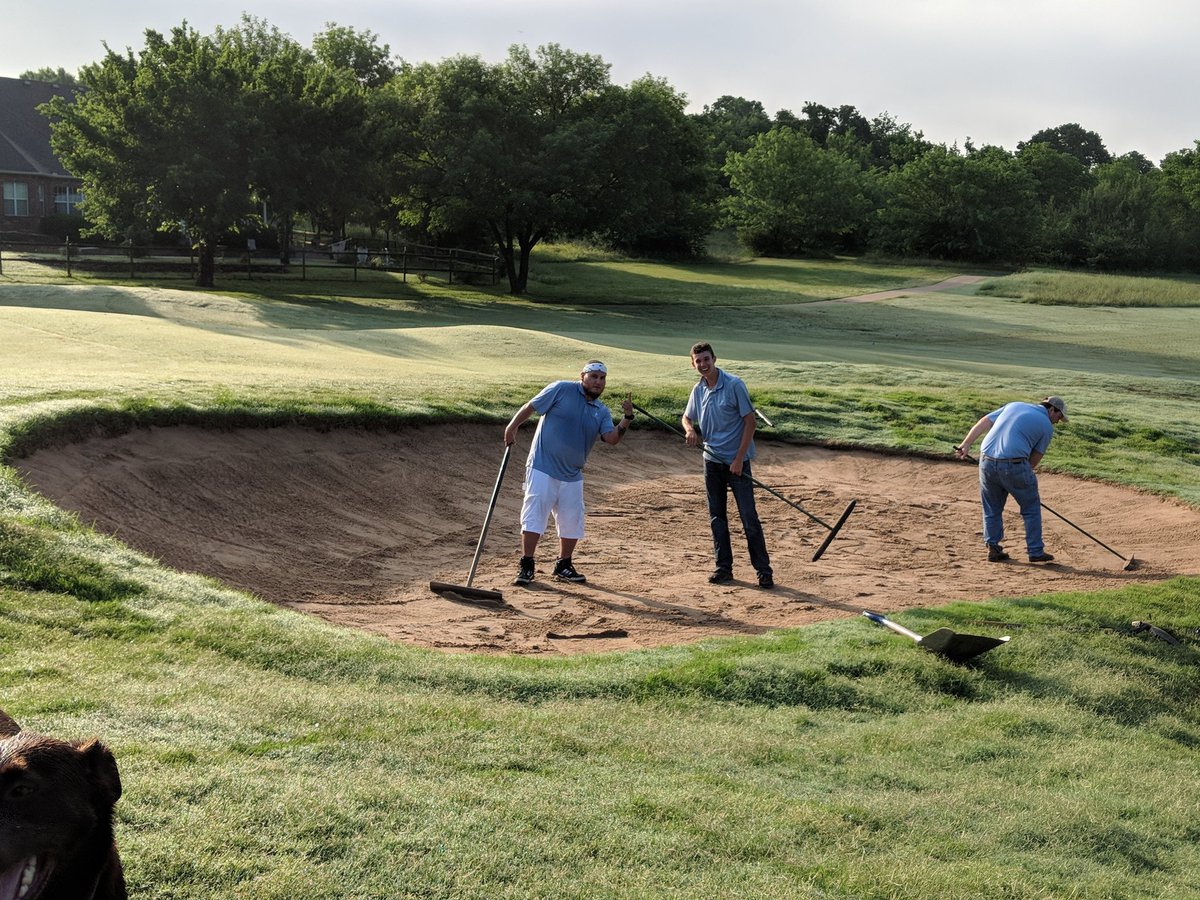
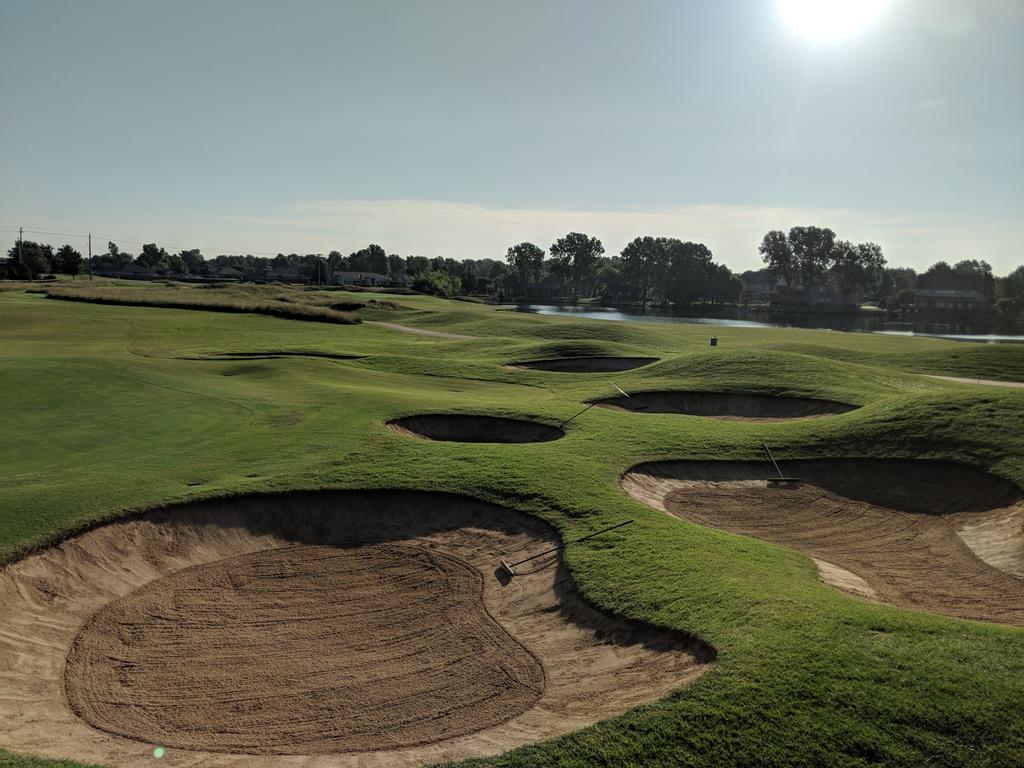
catching up on bunker details
We began our season as we always do, hiring and training our seasonal staff during the spring.  This year we started off projecting to have full staff in place by mid April.  We achieved that goal but by mid June, we had lost, for various reasons, almost 40% of our crew.  Despite advertising the position continuously throughout the summer, we were unable to fill those vacancies.  This meant we all had to work a little harder to keep the golf course standards up and meet the expectations of our members and guests.  This shortage was mostly felt within our mower operator staff.  We had to get very creative with our remaining staff to ensure all surfaces were mowed on a consistent basis.  Based on the feedback I got throughout the year, we met that mark and I couldn't be more proud of the guys diligence and determination.

The weather was another big challenge.  Plentiful spring/early summer rainfall brought heavy Bermuda growth during the warm summer months.  Losing almost all of your mower operators during periods of heavy growth are not ideal.  Despite this fact, the greenskeepers rallied and were able to help us keep up with this intense growth.  In order to accomplish this, some of the detail work throughout the golf course had to be put to the side.  During late July, there was a big cool down that helped suppress growth and also allowed us to spend less time watering greens.  This reduction in the workload took the pressure off the crew and allowed us to play catch up on details such as trim mowing, topdressing divots on tees, bunker details and clubhouse work.

I cannot say enough good things about the crew that we had this year.  We faced adversity and the guys put in the extra hours to ensure that our members and guests could enjoy a golf course they can be proud of.


Friday, December 21, 2018

Winter Solstice

Today is the winter solstice which means it is the shortest day of the year and the official start to meteorological winter.  Leading up to today, we've had a very mild winter.  December has been above average for most of the month and November was also very mild despite getting a little snow on November 12th.  Golfers have been blessed with plenty of nice days to get out and enjoy their golf course.  It has also been nice for our department.  Warm, sunny days are always nice this time of year to be out conducting our work.

With all the nice golfing weather we've been having, the grounds crew has been busy most mornings preparing the golf course for the days rounds.  Aside from daily course preparations, the crew renovated the cart path extension left of #12 green (more info found here), applied wetting agent to collars, installed rock to #2 creek, refurbished the clubhouse patio furniture, trimmed trees, and many other miscellaneous activities. 

On December 1st, we said goodbye to our seasonal staff.  This day is always tough.  As a group, we have fought shoulder to shoulder through a tough summer and they should be proud of the golf course they have produced.  I know I am.  I don't know where life will take them but I would be proud to have them back next year.

Recently, we also said goodbye to our long-time Assistant Superintendent, Michael Liebe, as he accepted the Superintendent position at South Lakes Golf Course in south Tulsa.  Michael has worked by my side for a very long time.  He would have had his 10th anniversary this March.  For the past 9 years, Michael has been here helping us create stability and routine, renovate and improve, and helped us overcome numerous obstacles along the way.  I can say unequivocally, that Michael is a big reason we are who we are today.  I am indebted to him for all his years of loyal, dependable service and wish him much success in his new role as Superintendent at South Lakes.

Looking ahead to the rest of winter, we plan on doing quite a bit of tree work along property edges to improve visibility and airflow throughout the golf course.  We also plan on renovating the creek crossing behind #10 sometime within the next few weeks.  There will also be some drainage and irrigation work to be done as well.  Not to mention, all the budget and agronomic planning that always occurs during the off-season. 

#12 Cart Path Extension


By now, those that have played golf at Bailey Ranch in the past few weeks have noticed the renovated cart path extension on #12 green.  While this project has been complete for over a month, I still wanted to take a few minutes and shine a light on the great work our crew did with this project. 

Rough grading the path
As you can see from the picture above, the area left of the green on #12 had been, for years, a muddy, rocky, mess.  People have used this area under the tree to get off the cart path and get closer to the green surround.  I've tried for years to keep it presentable under this tree using mulch, but mulch moves around when it rains and needs to be replenished every few years to keep it looking nice.  Following the success of the project on #2 tee, we decided to do something similar on #12.  The pictures below so the process used and the finished product.  I am very proud of the staff for their hard work and determination and couldn't be happier with how it turned out!
With gravel installed, RR tie curbs are set
 
Dirt back fill and sod to tie-in project to adjacent slopes

Before
After

Thursday, September 6, 2018

Fall Greens Aeration


It's hard to believe it's already that time of year, but fall aeration of our greens is next week!  Starting Monday, the front nine will be closed while we work on them and then the work will continue to the back nine on Tuesday.  As always, the front nine will reopen Tuesday while we work on the back nine.  On Wednesday, the entire course will be open for regular play.  You will notice, however, the aerifier out on the course performing a final, small-tine, aeration.  This portion of the project will have minimal impact on play and shouldn't affect putting quality.

Once the process is complete, we expect to be healed in and back to normal within 10-14 days.  Aeration naturally softens the surface so ball marks will be an issue until we heal in and our surface firmness returns.  During this time, do your fellow golfers a favor, and fix your ball marks!

As always, we appreciate your patience while we conduct this vital work to improving the quality of our putting greens.  If you have any questions, please contact me at ccook@cityofowasso.com, or find me on the golf course.  Thanks!

Friday, August 17, 2018

#12 Fairway Update

It's been over 35 days since we planted the new Riviera Bermudagrass on #12 fairway and we are very pleased with our progress thus far!  Now that the canopy has achieved full coverage, we will begin to work on density as we look to get the turf ready for winter.  We have about 45 more days of good growing weather and we need to get the young seedlings as healthy as possible.

We planned on pulling ropes down this weekend, but the rains and wet conditions have forced our hand and now plan on opening that fairway to cart traffic on Monday.  Once the ropes are down, we will be better able to integrate the new fairway into our existing fairway management program.  We will begin mowing the new fairway 3 times per week, fertilizing as necessary and begin spraying growth regulators to improve density by increasing the number of leaf blades per inch.  Riviera is by nature, a very winter hardy grass, but all juvenile turf is vulnerable to stress and we need to be sure the new turf is ready for whatever this winter has planned. 

Monday, August 13, 2018

#12 Fairway Conversion Update

7 days after planting
It's been over 30 days since we seeded the new Riviera Bermudagrass in #12 fairway and it's looking good!  As you can see from the picture on the right, we had germination about 7 days after planting!  Over the past few weeks, the new turf continued to make significant progress. As turf got taller and began to fill in, we increased the mowing frequency to match the growth.  Last week, we began the same mowing schedule as the other fairways.  Now that the Riviera is growing in quickly, it is almost time to pull down the ropes and open it to cart traffic!  The plan right now is to let these storms pass through over the next few days and hopefully dry up enough to open it on Saturday.  Over the next few months, we will be pushing turf to grow more aggressively to finish filling in before winter. 

I know everyone will be excited to get out on the new turf and I sincerely appreciate everyone's patience throughout this whole project.  Looking forward to seeing everyone out enjoying the new fairway soon!

30 days after planting

Wednesday, July 11, 2018

#12 Fairway Conversion Update


As of Tuesday, July 10th, the fairway on #12 has been seeded!  I know everyone has been anxiously waiting for this day.  The next time you're out on the course, you'll notice ropes have been installed around the perimeter of the fairway to prevent cart traffic from entering the fairway.  The fairway is still in play and there are no other use restrictions besides the carts.  Over the next 30 days, the ropes must stay up to allow the new seedlings time to establish and begin to grow.  Once we begin mowing regularly the ropes will be pulled down and the fairway will reopen to cart traffic.

Wednesday, June 20, 2018

#12 Fairway Turf Conversion


A lot of people have been asking about #12 fairway lately, and I'm sorry it has taken me this long to put out more information about what we have been doing over there.  For those who may not know, we are planning on converting #12 fairway from Common Bermuda to Riviera Bermuda.  Riviera is a seeded variety that has many improvements over Common.  It is more heat, drought, disease, and cold tolerant.  It has better density and color.  Riviera also greens up sooner in the spring and stays greener later into the fall.  During the next few years, we will observe this new grass and see if it will meet expectations for a larger project to re-grass all our fairways in the future.

Currently, the grounds department is killing the existing common Bermuda grass in preparation for seeding on July 10th.  Bermuda is a very resilient turf and can be quite difficult to fully eradicate.  As of today, we have sprayed Roundup three times over the past month and still plan on one more application a few days before seeding.  Why go through all the trouble?  Well, in order to get the full benefit of the new turf, we must completely kill the original stand of grass so that it won't contaminate the new fairway.  The color and texture of the old and new grasses are different enough that any remnants of the old common Bermuda would stand out and reduce the overall quality of the new fairway.

Once we have the seed in the ground, the fairway will be roped off from golf carts until the new turf is established and we begin mowing regularly.  Just to clarify, the hole will remain open and shots can be played off the fairway, we just cannot allow carts on the fairway until the ropes are taken down.  The establishment process should take 30-45 days and then we will be pushing the new fairway with water and fertilizer to achieve full density before winter.

We realize this project is an inconvenience, but feel that the long term benefits will be worth it.  If anyone has questions about the project or anything else for that matter, please feel free to contact me.

As always, see you on the course!

Wednesday, May 23, 2018

Collars: Winter Injury Update

Picture taken April 26th
After a cold, dry winter, and the second coldest April on record, the hot topic among superintendents in our region has been winter injury in collars.  Talking with quite a few of my colleagues throughout the area, it seems that everyone has needed to replace turf in collars, or is planning on it soon.  As you probably know, we also experienced winter injury on collars.  The first question that comes to mind is: why?  Well, the short answer is that many golf courses in this area, ourselves included, that have Bentgrass greens and Bermuda collars are at risk of the collar encroaching into the green overtime.  As the green gets smaller, the collar "moves" onto the greens mix.  This creates a collar that is on top of the sand greens mix instead of the clay that the original collar was built on.  Sandy soils get much colder and dryer than clay during the winter.  This puts the Bermuda in the collar at a high risk for winter injury relative to the Bermuda that is on the clay in the fairways and surrounds. 


As you can see from the pictures to the right, time and good growing weather have fixed many of the areas that were slow to come out of winter.  There will, however, still be some sod that needs replaced (portions of the collar on #'s 10, 12, and 13 come to mind).
Picture taken May 14th

So, how can we prevent this from happening in the future?  We are currently working with Oklahoma State University to come up with a preventative plan to minimize the risks of winter injury on our collars.  The best way to solve this problem would be to expand the greens to their original dimensions effectively pushing the collars back onto the clay where it is meant to be.  This is a very costly and invasive project and isn't likely to happen in the near future.  Other alternatives are to utilize more cold and drought tolerant Bermuda varieties that can tolerate growing on sandy soils.  This is less expensive yet still cost prohibitive to replace all our collars.  We do plan on planting some different varieties over the next year or so as a trial to see how they perform.  In the short term though, we plan on continuing our cultivation program to improve the health the Bermuda we have, and plan on incorporating amendments into the sandy soil in the collars to help hold more moisture.  Increasing soil moisture is one of the best ways to mitigate winter injury besides using covers, which isn't practical.

Summer is here and great Bermuda growing weather is here to stay, so our collars will only get better and better for the rest of the season.  We appreciate everyone being so understanding while we work through this issue.  As always, if anyone has questions feel free ask.  See you on the course!

Friday, April 20, 2018

Course Update: Sprinter?


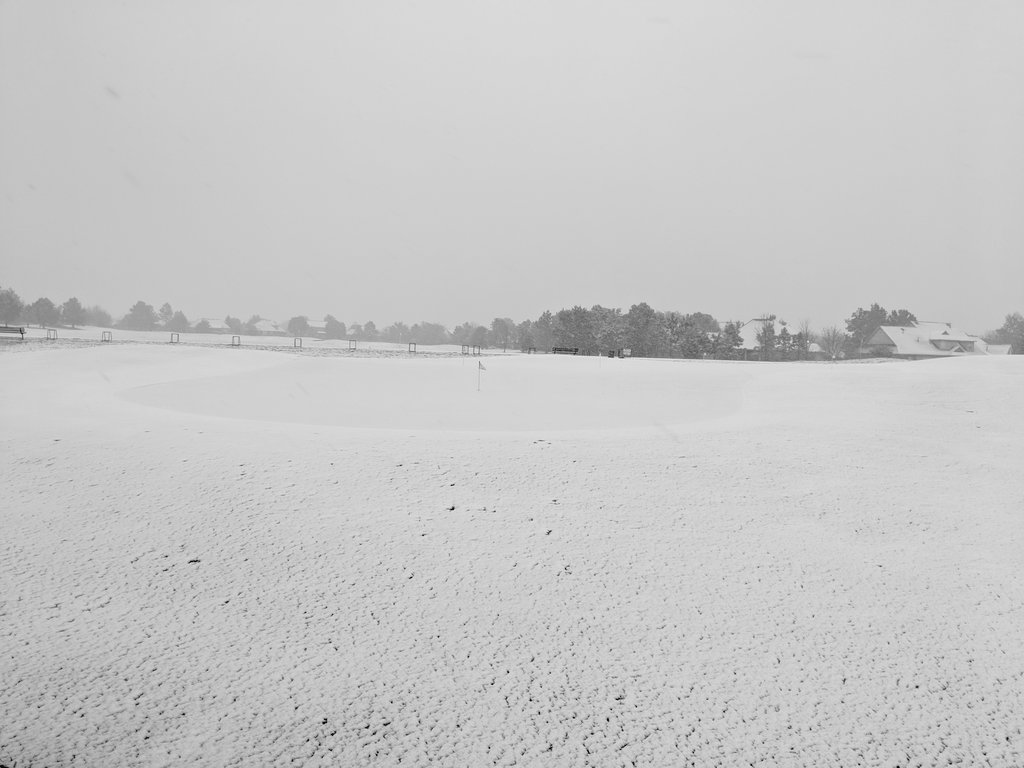
Snow on April 7th!?


Last month, I wrote a short post about how the mild temperatures of spring were signaling all the Redbuds, Forsythia and Pear trees to bloom and how the turf growing season would be just around the corner.  Well...as it turns out, Mother Nature had other plans.  As I sit here today, the spring bloom has come and gone, but our Bermuda turf has actually taken a big step backwards into winter dormancy over the past few weeks.  We were more green going into April than we are right now.  This is due, in large part, to multiple frosts, and a deep freeze of 25 degrees on the 7th accompanied by about an inch of snow.  In fact, April has been so cold that, so far, we've had 9 morning lows at 32 degrees, or lower, out of the first 20 days of April.  This winter was by most accounts dry and quite cold at times.  When this happens, winter injury on Bermuda begins to be a concern.  I'll admit that winterkill was a frequent topic amongst area superintendents this winter, but despite our concerns, the consensus was that while we were monitoring it closely, no one had seen any evidence of widespread injury.  We seem to have come out of winter largely unscathed, however, we are not without our scars.  There are a few areas on collars that I'm not optimistic about.  We will monitor these areas closely and make a determination for replacing the sod in the coming weeks.  In the mean time, our staff will do everything they can to minimize mechanical and chemical stresses on our collars to assist in their recovery. 

Speaking of recovery, as you are likely aware, our greens have still not fully recovered from core aeration back in late March.  Although recovery from Spring aeration inherently takes longer than in the Fall, we are definitely behind schedule.  This difference in recovery is largely due to soil, and air, temperatures being much higher in the Fall and therefore plant growth is more aggressive.  Having said that, I typically expect Spring recovery to take 14-21 days and we are at about 90% recovery after 27 days.  Greens can take 10-14 days in the Fall to fully recover. 

Winter injury on #10
The good news is that these cold temperatures can't last forever.  The one silver lining to all this cold weather is that since it has restricted Bermuda growth, we have more time to hire staff and get them trained.  We are currently at about 50% staffing and these cold temps have been a bit of a blessing in disguise.  Filling out the rest of our team is one of my top priorities right now and I feel confident we will get staffed before mid-May.


April 4th
Besides spending time training new staff on mowing, our greenskeepers have been busy preparing the golf course each day for tournaments.  This is the busiest time of year for school tournaments, as their season is quite short.  It is not uncommon to have 2-3 tournaments a week during late March through April.  Once we get past early May, the school events will cease and we will phase over to corporate and fundraising tournaments for the remainder of the season.

While our focus remains on daily conditions and tournament preparations, we are shifting our attention to early summer.  There are still many tasks to be completed to prepare the golf course for a busy summer season.  Over the next few months, the grounds staff will be very busy applying fertilizers and plant protectants, performing cultural practices to various surfaces, and working into our weekly routine.

Spring is always an exciting time of year on the golf course with plenty of suprises!  Summer is coming, and we'll be ready!  As always, we look forward to seeing you on the course!

New temporary lake on #9 fairway after 4 inches of rain March 26th


Sod Project on #14 Cart Path


Over the past few days, the grounds staff has been working on regrading and sodding bare areas along #14 cart path.  This afternoon, all the sod has been laid and now we begin the grow in process.  During grow in, is when the sod is the most vulnerable to damage from cart and foot traffic.  Even though ropes and signage have been place around the sod areas, I would encourage everyone to use caution in the area and avoid walking, or driving, in these areas until these areas are reopened and the rope is pulled down. 

While new sod is trying to take root and start growing in, the soil underneath is VERY vulnerable and can easily rut, or shift, under any kind of weight, especially after a rain storm.  We are expecting rain this weekend, so please avoid these areas next week as they will be very soft.  We are very happy with the finished product and appreciate everyone's cooperation while we work to grow in the new sod!