Wednesday, February 4, 2015

January Course Update

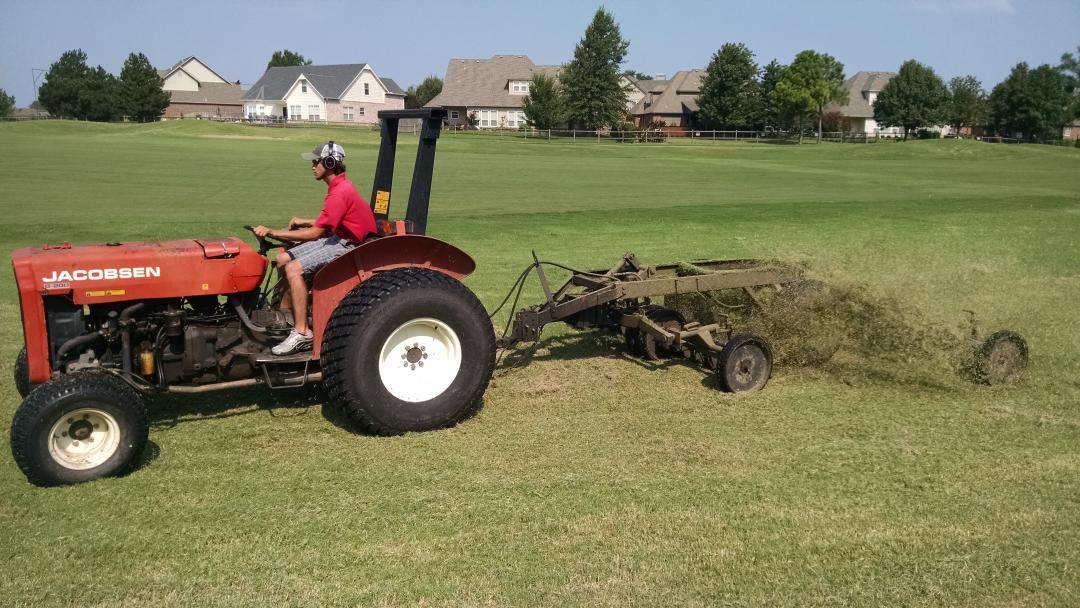
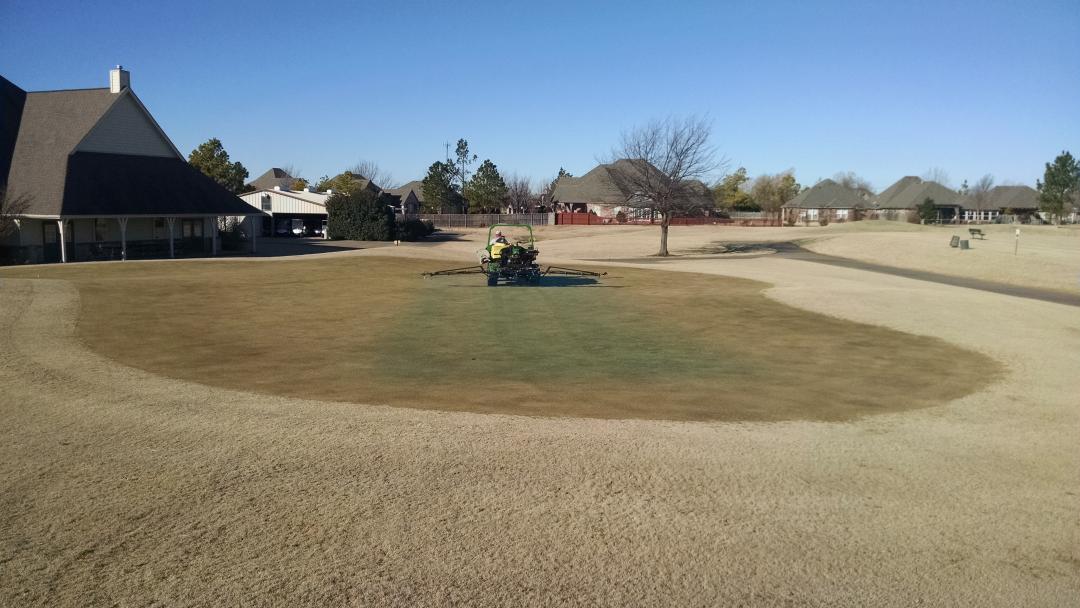
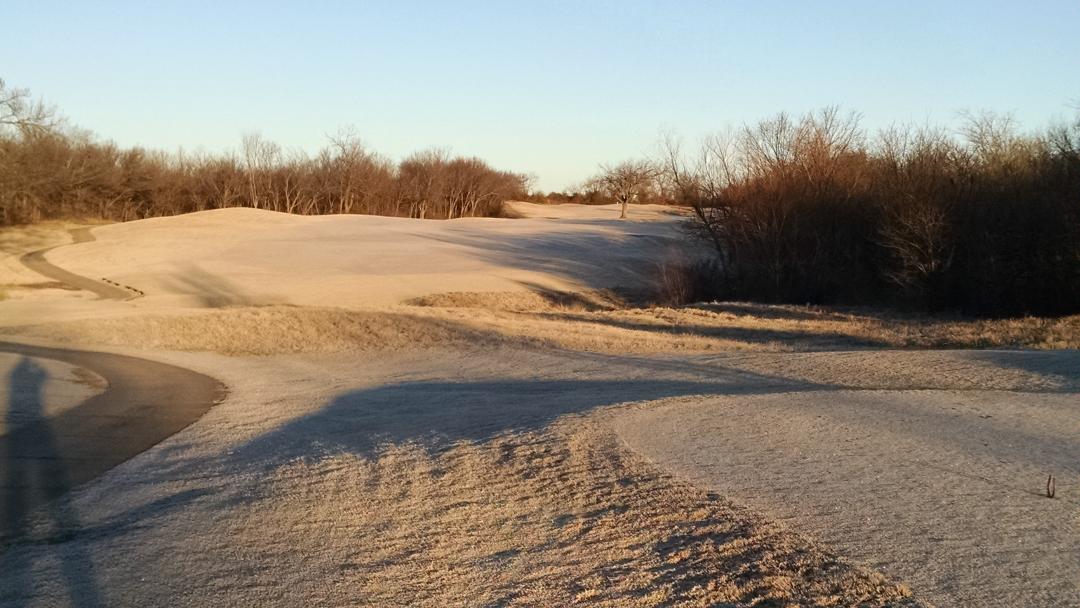
Embedded image permalinkThe weather during January can be unpredictable to say the least.  Cold weather is expected but there can be plenty of great weather as well.  This year was no different. We started out January with seasonably cold weather which kept golfers away.  Thankfully, during the second half of the month, the weather warmed up to record levels which allowed many of the members and guests to enjoy some great golf.  The warm, dry weather exacerbated the already strengthening drought conditions which forced the grounds staff to apply a wetting agent to greens to keep soil moisture at acceptable levels.  We don't typically need to do this, but felt it was necessary to intervene.
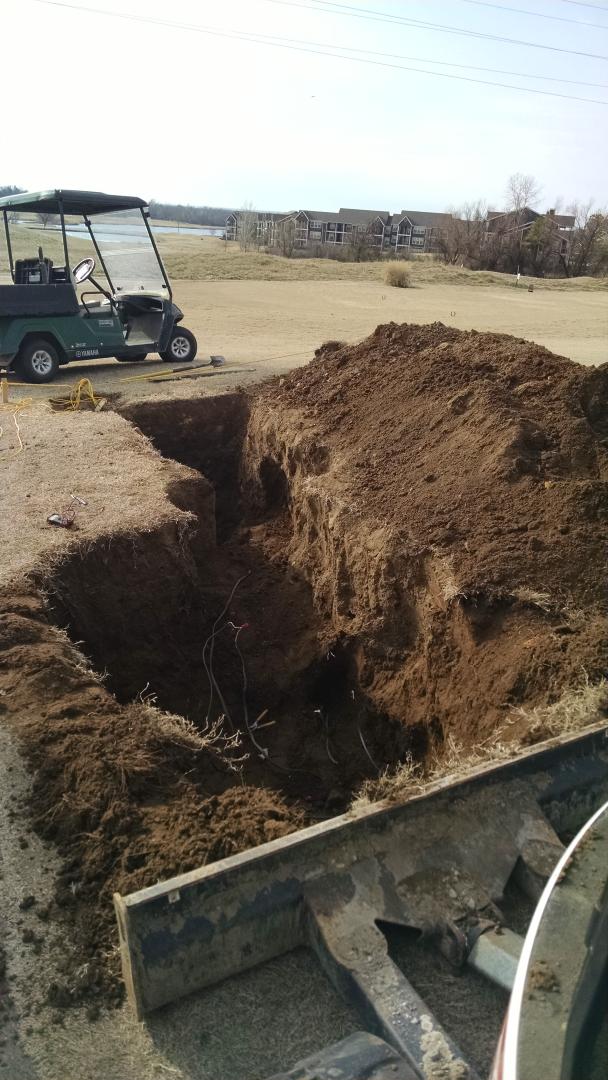
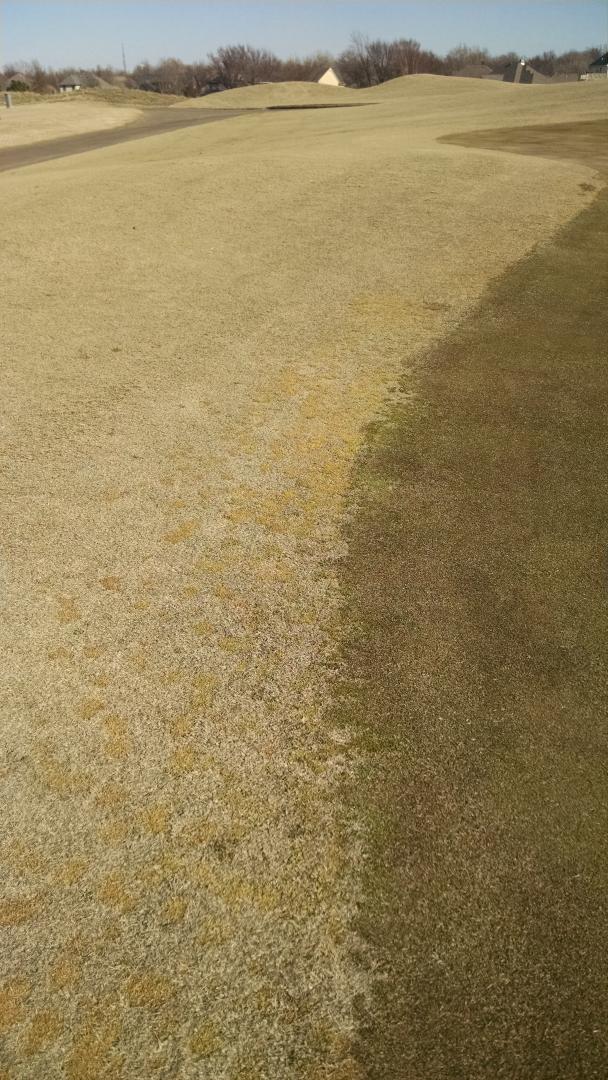
Embedded image permalinkThe nice weather was not only great for golfers, the grounds staff took advantage of the mild weather and got several key projects completed.  During the middle of January, Doug, our chemical technician, applied a generic Roundup product to our greens surrounds to clean up the few weeds we have.  We are now seeing the effects from that spray and am excited to see the surrounds cleaned up.  Those of you who played during mid-January, likely noticed the large hole near #1 tee.  Joe, our irrigation technician, had been dealing with an bad electrical splice that powered our irrigation system on holes 1,2,10, and 18.  It was a big relief to have that problem solved and the hole backfilled.  The big project we worked on, was the drainage addition to #7.  I spoke in detail about the project in our last post, so I won't expand on that here.  However, that was a big project that took our entire crew several weeks. 
As we phase into February, wrapping up winter projects and preparing for spring will be our main focus.  Continued drainage work, tree pruning, and preemergent applications will be at the top of our list.  The golf course seems to have made it through January in great condition.  Barring any serious weather in February, I feel very confident about where the golf course is positioned as we near late winter.  
Embedded image permalink


Friday, January 30, 2015

#7 Drainage


Over the past week or so, the grounds staff had been working on a drainage project along the cart path of #7.  This project has been on our wish list for some time and are glad to have it completed.  The drainage system for the #7 green, bunker and basins around the green, all connect together and go north to an exit point about 150 yards away from the green.  When the course was constructed, and no houses existed, this likely seemed to be the best option.  Years later, with the area fully developed, this drainage outlet has been a nuisance for the homeowners in the area.  To solve the problem, it was decided that the best thing to do would be to take the drain outlet down to the ditch right of the tee complex near Mingo, by adding additional drainage pipe.  In total, staff added almost 800' of drain pipe and had to cross the cart path twice.  This presented the only real challenge to the project, in that we had to cut and remove portions of the cart path so we could trench in new pipe.  Once the new pipe was installed, new concrete was installed back to repair the cart path.  Earlier this week, the last few details were completed and the project is now officially done.


Tuesday, December 30, 2014

Weather Update & Look Back at 2014

I've shared the most recent forecast for the upcoming winter weather courtesy of the Gary McManus, Oklahoma's Climatologist for the Oklahoma Climatological Survey.  It's a funny take on recent weather events as well as a thorough look back at the weather we experienced this past year.  Enjoy!


MESONET TICKER ... MESONET TICKER ... MESONET TICKER ... MESONET TICKER ...
December 29, 2014  December 29, 2014  December 29, 2014  December 29, 2014 


The excitingly boring weather of 2014

It's hard to look past the coming arctic blast to end 2014 to look BACK at the
past weather of 2014, so let's get the future excitement out of the way first.
Okay, to start off with, since freezing rain has mentioned, we are officially
moving the BRAUM'S BREAD-AND-MILK DEFCON LEVEL to THREE!!! I repeat, we are
officially moving the BRAUM'S BREAD-AND-MILK DEFCON LEVEL to TWO!! (see how
quickly we react here with up-to-the-minute hysteria??)

http://ticker.mesonet.org/archive/20141229/braums-defcon2.png

Yes, we've gone to "KNOCK PEOPLE OVER IF YOU HAVE TO" level. Mostly bombastic
and reactionary, of course, but just our effort to try and keep folks from
driving on ice (DISCLAIMER: should ice occur).

Here is the setup as provided in pictures from the local NWS offices.

http://ticker.mesonet.org/archive/20141229/nws-amarillo.jpg
http://ticker.mesonet.org/archive/20141229/nws-norman1.jpg
http://ticker.mesonet.org/archive/20141229/nws-norman3.jpg
http://ticker.mesonet.org/archive/20141229/nws-norman4.jpg
http://ticker.mesonet.org/archive/20141229/nws-norman5.jpg
http://ticker.mesonet.org/archive/20141229/nws-norman6.jpg
http://ticker.mesonet.org/archive/20141229/nws-tulsa.png

Remember, this is winter weather we're talking, so the forecast is going to
change between now and ICE-MAGEDDON. So keep track of the changing conditions
as we get closer because the precipitation type is vitally important. However,
the arctic blast is a certainty.

The beast is poised to our north as we speak.

http://ticker.mesonet.org/archive/20141229/us-windchills.png

So prepare for this, because it's coming.

http://ticker.mesonet.org/archive/20141229/wed-morning-lows.png

I'm afraid there won't be any melting on the roads with this coming system.

Okay, enough hysteria. Let's turn back the clock and take a look back at 2014.

Enjoy.
-------------------------------------------------------------------------------


The weather of 2014 would probably be considered boring by most, and rightfully
so. After all, there were no EF-5 twisters ravaging the countryside, nor was
there a never ending onslaught of days with triple-digit heat. The blizzards
of the last few years never materialized, nor did that other unwelcome winter
visitor, the ice storm. What we did have, however, was drought, the most boring
– if not most damaging – of Oklahoma's weather hazards. That particular guest
has been plaguing Oklahoma's ecosystem, agriculture and economy since its
beginning in late fall 2010 to the tune of several billion dollars in damage.
The spring rainy season was mostly a bust, although a return of moisture in
late May paved the way for more rain during June and July. That
uncharacteristically timed relief delayed the re-intensification of drought
that started earlier in the year, but more dry stretches from August forward
left over 60 percent of the state in drought at year's end. The year ended with
a dark, dank and dreary December in which the sun was mostly a no-show at only
35.4 percent of possible sunshine according to the Oklahoma Mesonet's solar
radiation sensors.

In the end, 2014 left us with memories of a (mostly) cold and (mostly) dry
year, with a few bursts of excitement to satisfy most weather enthusiasts. Here
are a few or the more notable weather highlights (or lowlights) from 2014, as
well as the top extremes as measured by the Oklahoma Mesonet.

2104 Oklahoma Weather Highlights
• According to preliminary data from the National Weather Service (NWS), 2014
  ended up with a total of 16 tornadoes, the lowest count since accurate
  records began in 1950. That bests the previous minimum annual twister count
  of 17 back in 1988. That stands in stark contrast to recent years that ranked
  near the top for annual tornado totals. The record of 145 is still held by
  1999, but 2011 and 2010 rank with the second- and fourth-highest totals at
  119 and 103, respectively. And 2013 tied for ninth highest at 82. The annual
  average tornado total for Oklahoma is approximately 56.
   o The strongest 2014 tornado listed was an EF-2 that struck the small
     town of Quapaw in Ottawa County, killing one and heavily damaging as
     many as 50 structures.
   o A tornado touched down near Lake Arcadia in central Oklahoma on the
     December 14, only the 25th tornado since 1950 for that month.
   o Of the 16 confirmed tornadoes, 11 were of the weakest rating of EF-0.
   o Although not associated with a tornado, a thunderstorm near Burneyville
     on July 30th produced a wind gust of 106 mph, tied for the fourth highest
     in Mesonet history.

• According to preliminary data from the Oklahoma Mesonet through December 28,
  the statewide average precipitation total for the year thus far was 28.56
  inches, 7.74 inches below normal. Depending on what possible precipitation
  falls in year's final three days, it is estimated that 2014 will rank
  somewhere from 25th to 30th driest since 1895 (note: the rankings in the
  statistics table below are since 1921).

   o The Mesonet site at Kenton recorded 13.2 inches of precipitation during
     2014, the lowest such total in the state. Broken Bow and Clayton led the
     state with 50.8 inches each.

http://ticker.mesonet.org/archive/20141229/2014-total-precip.png
http://ticker.mesonet.org/archive/20141229/2014-depart-normal-precip.png
http://ticker.mesonet.org/archive/20141229/2014-precip-stats.png


   o The spring (March-May) rainy season was the 11th driest on record with a
     statewide average of 6.57 inches, more than 5 inches below normal.

http://ticker.mesonet.org/archive/20141229/mar-may-totals.png
http://ticker.mesonet.org/archive/20141229/mar-may-depart-normal.png
http://ticker.mesonet.org/archive/20141229/mar-may-pct-normal.png

   o The January-May statewide average was 7.39 inches, the 3rd driest first
     five months of the year on record.
   o June and July combined were the 15th wettest on record across Oklahoma
     with an average of 10.28 inches, nearly 3.5 inches above normal.

http://ticker.mesonet.org/archive/20141229/jun-july-depart-normal.png
http://ticker.mesonet.org/archive/20141229/jun-july-pct-normal.png
http://ticker.mesonet.org/archive/20141229/jun-july-totals.png

• A no-show summer and a frigid first few months of the year guaranteed a cool
  2014, and the statistics back that up. Preliminary data from the Oklahoma
  Mesonet place the statewide average temperature for 2014 at 58.9 degrees,
  about a degree below normal. Depending on what occurs the last few days of
  the year, that would rank 2014's temperature somewhere in the 20-30th coolest
  on record range. Interestingly, 2013's final statewide temperature also
  finished at 58.9 degrees.
   o Summer itself was the 24th coolest on record with a statewide average of
     78.6 degrees, 1.1 degrees below normal.
   o July was the fifth coolest on record and 4.3 degrees below normal.
   o A brush with frigid weather in the middle of November proved to be one of
     the most significant early-season winter outbreaks on record for Oklahoma.
     The cold snap began with a cold front on the 11th that dropped
     temperatures from the 70s and 80s into the 30s and 40s. The Oklahoma
     Mesonet station at Boise City struggled to a high of 15 degrees on the
     12th just two days after reaching a high of 81 degrees. Most of the state
     had spent from 100 to more than 150 hours below freezing. The event also
     came with a statewide blanket of snow. Amounts of 3-4 inches were common
     across parts of western, northern and central Oklahoma.
   o December finished the year off with one last warm month, but not in the
     way one would normally think. There were very few pleasantly warm
     afternoons, as daytime highs were actually a bit below normal. The morning
     lows, however, were another story. Through the 29th, the statewide average
     low temperature was 35.2 degrees, 7.7 degrees above normal. Overall, the
     statewide average through the 29th was 3.4 degrees above normal. The last
     two days of December promised to be quite chilly, however, which could
     bring that average down just a bit.
-------------------------------------------------------------------------------

The 2014 Oklahoma Mesonet extremes


----------------------------------
Temperature
----------------------------------
Maximum Air Temperature
FREEDOM  106.9 F  07/26/2014

Minimum Air Temperature
NOWATA   -12.1 F   01/06/2014

Maximum Heat Index
LANE     112.6 F   08/08/2014

Minimum Wind Chill
ALVA     -25.0 F   01/06/2014

Greatest 1-hour Temperature Change
KENTON   32.9 F   (80.6 F 11/10/2014 21:55 to 47.7 F 11/10/2014 22:50)

Greatest 24-hour Temperature Change
SLAPOUT  66.2 F   (84.6 F 11/10/2014 20:40 to 18.3 F 11/11/2014 13:15)


----------------------------------
Humidity
----------------------------------
Highest Dew Point Temperature
BROKEN BOW   81.3 F   07/27/2014

Lowest Dew Point Temperature
MIAMI   -18.8 F   01/06/2014


----------------------------------
Rainfall
----------------------------------
Greatest 1-hour Rainfall
HINTON  3.07"   06/19/2014

Greatest 24-hour Rainfall
CLAYTON   6.60" (07/30/2014 - 07/31/2014)

----------------------------------
Wind Speed
----------------------------------
Maximum Wind Speed (5-minute average)
BEAVER   59.7 mph   07/01/2014

Maximum Wind Gust
BURNEYVILLE    105.8 mph   07/31/2014


----------------------------------
Pressure
----------------------------------
Highest Mean Sea Level Pressure
CHEROKEE   1044.55 mb   01/23/2014

Lowest Mean Sea Level Pressure
MAY RANCH   989.17 mb   04/27/2014

Gary McManus
State Climatologist
Oklahoma Mesonet
Oklahoma Climatological Survey
(405) 325-2253
gmcmanus@mesonet.org

Sunday, December 28, 2014

New Equipment

It's not a secret that mowing equipment is an indispensable asset to any golf course.  Mowing is the one job that is done most frequently and has the biggest impact on the condition of the golf course.  From the first moment I saw our mowing fleet back in 2007, I quickly realized that a plan would be needed to phase out some of this old equipment to improve productivity and course conditions.  Over the years, we've had some success replacing certain machines, but never really made a big dent in the problem due to budget constraints.  We determined, that due to the condition of our old fleet, we wouldn't ever realize the increases in efficiency and course conditions if we just picked at the problem by buying 1-2 machines a year.  Keeping all this in mind, the grounds staff determined that leasing to purchase the entire fleet in one package would be most cost effective option.  The staff demoed equipment over the past year to determine which equipment would meet our needs.  Through this process, we quickly realized just how much inefficient our old fleet really was.

On November 18th, 2014, a recommendation for approval of a lease agreement was presented to the Owasso City Council.  The council, after some thorough questioning, unanimously approved the agreement.  I'd like to take a minute to recognize the council, as well as the leadership at Owasso City Hall.  The administrative staff at the City has been extremely supportive throughout this process.  I left that council meeting humbled by the strong vote of confidence by the Owasso City Council, thereby affirming their support for everything that the Bailey grounds department has done over the past several years to get the golf course back into something the community can be proud of.

This past week, the Bailey Ranch Grounds Department took delivery of the new fleet.  After years of struggling to keep the old equipment running, words cannot describe how grateful we are to have this new equipment!  The grounds staff will do everything in their power to ensure this equipment remains the best possible condition.

With all this new equipment sitting ready to go, we cannot wait to get started on a great 2015 seaon!


Friday, December 5, 2014

Divot Pattern Reminder

Now that the Bermudagrass on the driving range is fully dormant, the divot pattern used by golfers will become increasingly important due to the lack of recovery by the turf.  Typically, the Bermudagrass will not grow aggressively enough for quick recovery from divots until late April.   This fairly long dormancy period, coupled with the intermittent mild weather we experience, can leave the quality of the driving range tee in less than ideal condition.

As I've mentioned before, the divot pattern in the graphic to the right, is the preferred pattern all year long.  It allows for quicker recovery through the growing season and allows us to maximize the dormant turf throughout the off-season.

The grounds staff would ask that you please follow this simple technique to preserve as much grass as possible so that we can maintain the highest quality turf possible until the plant begin to recover in spring.

Monday, November 24, 2014

#15 Cart Path

Removing old cart path
If I asked anyone who plays at Bailey Ranch where the roughest piece of cart path was on the golf course, I'm sure #15 would be at the top of everyone's list.  It's no secret that the area at the bottom of the hill has been a problem for longer than I'd like to admit.  Several years ago, this portion of the cart path began to settle and asphalt was brought in as a temporary solution to smooth out the cart path.  This seemed like a logical solution at the time, but admittedly coming back to this project to fix it the right way was lost in the shuffle over the years with regarding project priorities.  Since there are fewer projects on the list, and with the growing season behind us, I decided last week to make this project a priority.

Last week, staff began the process of removing the old asphalt and concrete to make way for the new material.  Once the old cart path was out of our way, forms were installed and new gravel was added, then compacted.  Long pieces of re-bar steel were laid in a grid pattern on top of the gravel to give the new concrete additional strength and guard against cracking in the future.  On Thursday of last week, the new concrete was poured and left to cure over the weekend.  Today the staff removed the forms, back filled soil along each side of the path and laid fresh sod to complete the project.  

I couldn't be more proud of the work the staff put into this project.  Although this kind of project may be a little outside their normal scope of work, they all worked together and the finished product speaks for itself.      
New gravel base being compacted
Brushing the concrete provides traction

Finished product

Friday, November 14, 2014

More Drainage

Digging up box right of #6 green
This off-season, one of the major objectives for the grounds staff will be drainage work.  Over the past twenty years, much of the drainage infrastructure that was installed, has aged and is in need of repair.  The staff will not only be adding new drainage to certain areas around the course this winter, but adding, repairing and leveling existing drainage.

One of the projects that has been on my list for quite some time, has been raising drainage boxes in basins throughout the golf course.  The majority of these drain boxes have sunken so far down that they have made it difficult to mow without damaging the turf and/or mowing equipment.  As you can see in the picture above, each box must be dug up, raised up to grade, back filled, then topped with new sod.  Drain basins in green surrounds are our first priority.  Once these are complete, the staff will move on to the remaining basins.

Finished product left of #6 green

Tuesday, November 11, 2014

#6 Drainage Upgrade

New basin going in
Last week, our irrigation technician, Joe Miller, spent some time upgrading the drain basin on #6 fairway.  We've had trouble with the basin washing out and eroding over the years.  It was determined that the basin would need to be enlarged to handle the water that flows into the basin from the tee box and upper portion of the fairway.  Since this basin sits approximately half way down the hole, there is a fair amount of acreage that this basin must drain. The original drain basin, which is in the top of the picture to the right is a 12" square box that is designed for 4" drain pipe.  There is 6" drain pipe already in the ground, so all that water coming down hill had to squeeze through that smaller box and continue down hill.  It's no wonder this box failed.

Joe tore out the old box and built a custom 18" circular basin which will handle significantly more water.  We shouldn't have any more problems with water backing up and pooling in this basin.  Yesterday Joe dressed up the basin with new sod and put up some rope to keep people out of the area.
Finished product

Friday, October 31, 2014

Goodbye 2014 Growing Season

Based on the forecast low temperature of 27 degrees for tomorrow morning, I think it is safe to say goodbye to the 2014 growing season.  The low temperature, calm winds, and dew point should coincide with a heavy frost which will force the Bermuda to shut down pretty quickly.  This time of year is a big transition period for us as we park our mowing equipment until spring, cut back on our set up schedules and say goodbye to our seasonal staff.

I find myself looking back, at the season as a whole, and am very proud of our staff, and the work they've accomplished.  I feel like we were able to provide a great product throughout the year and had a strong finish.  I can't wait to tackle some projects this winter and get geared up for another great year in 2015!


Wednesday, October 29, 2014

#18 Drainage Project

Checking the grade of trench
This afternoon, the grounds staff completed the installation of a new drainage structure along the cart path at #18 tee box.  The staff installed three catch basins in key areas along the path to allow the surface water to move underground.  The cart path has a subtle low spot which kept the water from naturally moving downhill and out of the way.  Water would collect in low spots along the path as a result.  Golfers and maintenance staff that would pull off the path would cause these wet spots to turn into potholes.  Once the potholes developed, the areas would never dry up resulting in a persistant problem.

Now that the drainage is in place, the cart path edge will stay dry and we shouldn't have any problems with potholes any more.  Since we have fresh sod down, I would like to remind everyone to please use caution while walking to and from the cart path, as the sod has not rooting into the ground and it could be unstable.  The area has been roped off to keep carts on the path and we ask that golfers slow down as they drive through this area.  With your help, we can keep the area as nice as possible.

As always, if you have any questions, please feel free to ask. Thank you.

Drainage installed,  trench being backfilled
New sod laid over trench


Finished product
Potholes along path before project


Wednesday, October 15, 2014

Detail Work

 
Joe leveling valve boxes and sprinkler heads at #13 green
Cooler temperatures and longer nights have significantly slowed down the growth rate of the Bermuda.  This has allowed the seasonal staff to allocate more of their time to detail work.  Topdressing divots on tee boxes, edging drain basins, leveling valve boxes, string trimming, back filling pot holes along cart paths, blowing divots and leaves off fairways are just a few tasks we are finally able to address.  Individually, these details may not be that noticeable, but cumulatively, they can have a big impact on the overall appearance of the golf course.  The staff has done a phenomenal job over the past few weeks getting some of these tasks completed.  
Joe's finished product on #2 green


Crisp edge around sprinkler heads
Sharp edge around basins

Deep Tining Greens


This morning, the grounds staff has begun deep tining greens.  As you can see from the picture, there is minimal disruption to the surface, and all that is required is a light roll afterward to get them smooth again.  The holes that are left behind are only 1/4" wide, but go 8 inches down.  These channels will not only allow water to freely drain down through the profile, but also increase oxygen content at the bottom of the root zone.  This increase in drainage and oxygen content, combined with the cooler weather, should encourage deep rooting as we phase into late fall/early winter.

This process, although very important, does take quite a long time to complete.  The tractor can only travel about a half-mile per hour.  We hope to have all the greens done by Thursday afternoon.  During the next two days, we realize we will be out amongst golfers.  Our staff will do their best to remain courteous while staying productive.  We appreciate your patience as you make your way through the course over the next few days.

As always, if you have any questions about the process, or the benefits, please don't hesitate to ask.  Thank you.

Thursday, September 25, 2014

Aeration Recovery

It's been just over 14 days since we began the fall aeration of greens and I have to say the recovery process went just as planned.  Ideal weather had a big part to play in the success of the process, however, I cannot diminish the efforts made by our team.  Timely applications of fertilizer, and diligent hand watering have kept each green in optimum health to minimize the time required for recovery.

Now that the holes are over 95% healed in, our focus this week has been to improve the playability of the greens.  The application of a growth regulator this past Monday has significantly reduced the amount of clippings collected each day, which will prolong the cut and improve ball roll.  Yesterday the staff ramped up efforts to improve smoothness by mowing the greens at .130", which is .005" lower, and then rolling the greens.  We noticed an immediate increase in both speed and smoothness after this process.  Today, we continued this process by double cutting greens at opposite directions to ensure all grass is cut and we continue to smooth the putting surface.  Tomorrow morning, the cutting height on greens will be lowered another .005" to .125".

Overall, we felt like the aeration process, and subsequent recovery, went very smoothly.  The weather has been ideal and we feel that the greens are set up perfectly for fantastic finish to the 2014 golf season!

Thursday, September 18, 2014

Greens Aeration Recovery

These 5/8" holes are almost filled in
It's been just over one week and greens seem to be right on track regarding aeration recovery.  Aeration is an aggressive process that takes typically 7-14 days for full recovery depending on several factors such as: tine size, soil moisture, weather and the growth rate of the turf.

Leading up to the process, the soil moisture is carefully monitored and nutrients are applied to maximize the growth potential.  After the process is completed, the greens are rolled and brushed for a few days until we feel that the sand has been worked into the canopy as much as possible.  Mowing is withheld during the first few days after the process is complete to allow the turf to growth through the sand and to allow the roller a few days to smooth the surface.

The first few days of mowing are primarily used to pick up the larger granules and excess sand that won't work into the holes.  This is a messy process which quickly dulls the mower blades and requires the staff to clean up the debris left behind.  Each day the clippings that are collected are inspected to monitor the ratio of sand to grass.  Initially, the buckets will be mostly sand and very heavy.  After a few days, the sand amount will
Minimal sand in clippings
decrease and the ratio will become about 50/50.

With almost a week of mowing sand, the reels were very dull and in need of sharpening.  This morning, with a freshly ground reels, we were pleased to see almost no sand in the buckets.  The photo on the right shows a handful of clippings from this morning.  Now that we are phasing out of the sandy portion of the recovery process, we will begin using our newer greens mower which will give us a much better quality of cut.  Once all the holes are filled in, we will slowly lower the height of cut from .135" back down to .120" for the fall tournament season.

As always, if there are any questions regarding the aeration process or subsequent recovery, please feel free to ask.  Thank you for your patience during this time.  

Bunker Maintenance

Sand is added where needed
Today, the grounds staff has begun checking sand depths in bunkers.  The grounds department completes this process 1-2 times a year depending on weather, play and other factors.

The staff takes measurements throughout the bunker looking for sand depths to be approximately 4-5" in the bottom and 2-3" on slopes.  Sand is then added to areas that do not meet this requirement.  We've just about got the front nine done and will work to finish the back nine by next week.

Then spread around until depths are on target
The grass around bunker edges has gotten away from us lately and we will be putting a fresh edge on them next week as well.  The staff should have the bunkers shining by the end of next week.

Thursday, August 28, 2014

Fall Aeration Rescheduled

After looking ahead to next week's weather, the decision has been made to postpone greens aeration until Tuesday September 9th and 10th.  The forecast calls for highs in the mid to high 90's, which is too hot to complete the process.  Aeration is inherently a stressful process and we need the greens to be ready to handle the stress.  If they are under heat, or drought stress, they will be more prone to injury during the aeration process.  We believe that pushing back the process one week, should allow the temperatures to come down into a more favorable range.

We will continue to monitor the weather and post any further changes, if any, to the schedule.  Thank you

Friday, August 22, 2014

Fall Greens Aeration


It's hard to believe, with this current heat wave, but fall aeration on greens is just around the corner.  On Tuesday September 2nd, the grounds staff will begin aerating the front nine greens.  This will allow play to continue on the back nine.  On Wednesday September 3rd, the front nine will be back open and ready for play while the back nine greens are aerated.  The practice greens will aerated on Wednesday morning.

Aeration is a key practice performed each spring and fall that promotes improved soil drainage, oxygen content, and root density.  For more information about the process and how it is performed, stay tuned.  Once the process is complete, I will post pictures that help explain how it is done.

Wednesday, August 20, 2014

Getting Caught Up

Embedded image permalink

This week, the grounds staff has been hard at work getting caught up on all the mowing on the golf course.  Tees, fairways, approaches and surrounds have all been cut at least twice this week.  The height of the rough was the main topic of conversation over the past week and we have made a lot of progress.  By the end of the week, we will have all rough cut back down to two inches.  Please excuse all the clippings in the rough as a result of all the mowing.  The staff will work hard to ensure all short turf is cut and clean for the weekend.

One Last Meal


Each year, in August, the grounds staff focuses on giving the course one final dose of food to get carbohydrates stored up before winter.  Winter injury of Bermudagrass is a big concern in this part of the country, and while we can never truly prevent winter injury if the weather gets really cold, providing a timely amount of the right nutrients will give the plant a fighting chance.  Douglas Knapp, our chemical applicator, has been hard at work this week applying a 10-5-22 blend of fertilizer "wall-to-wall", meaning that all maintained turf on property, minus greens, was treated.  There is approximately 77 acres of maintained Bermudagrass on property that had to be treated and the staff was able to complete the application in about 10 hours.

For those who may not know, whenever you are looking at fertilizer bags, the three numbers on the front label are the percentages by weight, of Nitrogen, Phosphorous, and Potassium, in that order.  For fall applications on Bermuda, we always look for just enough nitrogen to sustain growth into October and let the plant naturally slow down into dormancy.  You never want to apply high rates of nitrogen past mid-September, because it will cause the plant to become succulent and it will be susceptible to winter injury and disease in the spring.  The main reason we choose this analysis is for the last number, the Potassium.  Potassium has shown to be helpful in reducing the risk of winter injury in Bermudagrass in the transition zone.  This analysis allows us to give the plant a high dose of this key nutrient just before it starts storing energy for dormancy, while keeping the amount of applied nitrogen relatively low.  Also, there is a small amount of Phosphorous included in this mix to help encourage root density going into winter.

Once watered in, the fertilizer should begin to take effect just in time for Labor Day weekend.  The plant response should last through October and set the course up very well for the upcoming busy tournament season!

Saturday, August 2, 2014

Tall Rough

With all the beautiful weather lately, it's hard to find many things to complain about, but one issue that has surfaced a lot lately is the height of our rough.  I couldn't agree more.  The recent rain storms have prevented us from sticking to our mowing schedules but have managed to keep up with our tees, greens, fairways and surrounds fairly well.  The main factor contributing to the tall grass has been the numerous mechanical issues we've encountered with our rough mower.  We've been borrowing and renting equipment, to do our best to keep up, but haven't been quite able to get 100% of the rough cut each week.  This leaves us with rough throughout the course with various stages of growth.  Some areas aren't too bad, while other areas, mostly wet areas, are getting very tall.  Mitchell, our equipment manager, has worked tirelessly to remedy the mower issue and we are looking forward to a dry week next week so we can get caught up.  I realize this is frustrating and appreciate your patience during this time.

As always, if you have any questions, or additional concerns, just let me know.  Thank you.